
How Team Vista worked to build a winning bid for the U.S. Soccer Federation, and what a high stakes loss taught us about the limits of strategy.
The World Cup was celebrated on every screen recently. Somewhere in the noise, a quieter contest played out a few years ago over a question that still matters: where should American soccer build its home? We were in the middle of that fight. This is the story of the bid we built, the campus we designed, and the reason the best strategy in the room does not always win the room.
THE BRIEF
Positioning a county to win a national institution
The U.S. Soccer Federation, long headquartered in Chicago, opened a national search for a new home. The headquarters and national training facility would anchor every level of American soccer under one banner, from the grassroots and high school game to the collegiate, Olympic, and professional ranks, all the way up to the teams competing on the world stage today.
Working closely with Chris Pumphrey, CEO of Elevate Douglas, Steve helped assembled a talented team of professionals.
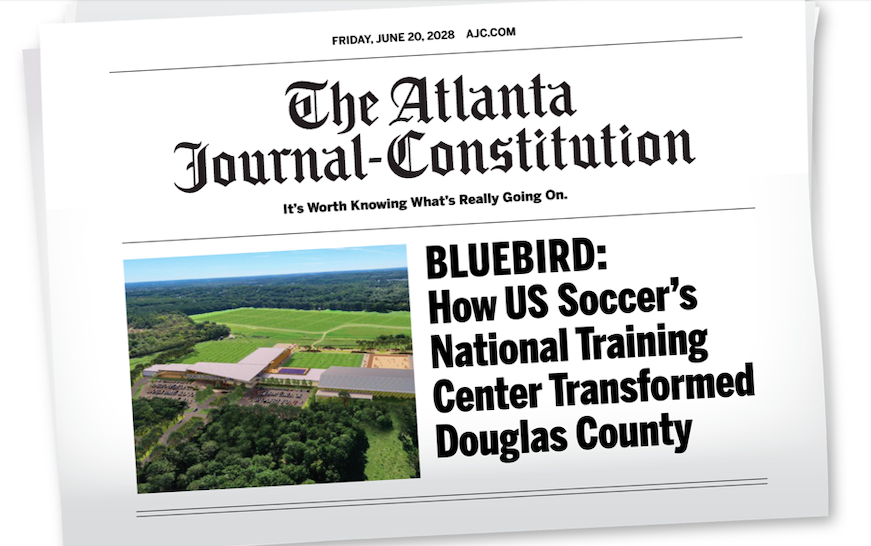
We created a newspaper front page 3 years in the future announcing that Douglas County landed the US Soccer Federation.
Elevate Douglas, the economic development arm of Douglas County, Georgia, brought Vista in with a clear assignment: tell a compelling story and win the bid to land the Federation on 200 acres of Tyler Perry's land in Douglasville. This was never a real estate pitch. It was a positioning challenge at the highest level. We were asked to position an entire county, and a marquee landowner’s asset, as the optimal home for a national institution.
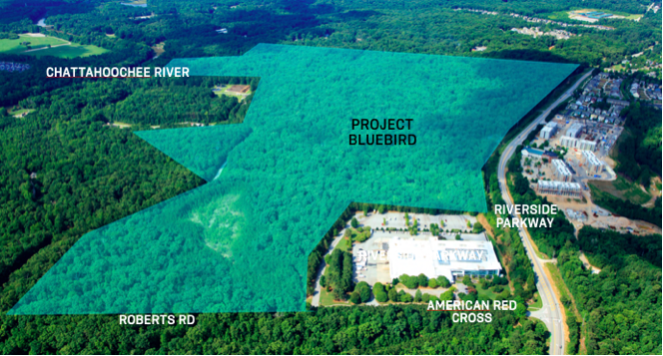
Project Bluebird was envisioned to be developed on a 200 acre tract in the heart of Douglas County.
THE FIELD
Three finalists, then a fifty million dollar catalyst
The national search narrowed to three finalists. Cary, North Carolina came out of the gate strong, offering a stadium that was already built and ready to hand over. The other two finalists were both in metro Atlanta: Fayette County to the south, and Douglas County to the west.
The decisive shift came when Arthur Blank, owner of Atlanta United, signaled that Mercedes-Benz Stadium could serve as the Federation’s home field. Blank committed seed money to bring the headquarters to Atlanta, and asked that his team help decide between the two remaining Georgia finalists. With that, the contest came down to two: Fayette and Douglas.
$100M: Cary’s already-built stadium, offered ready to hand over
$50M: Arthur Blank’s seed commitment to bring the HQ to Atlanta
3 to 2: Finalists narrowed to a single Atlanta-area decision
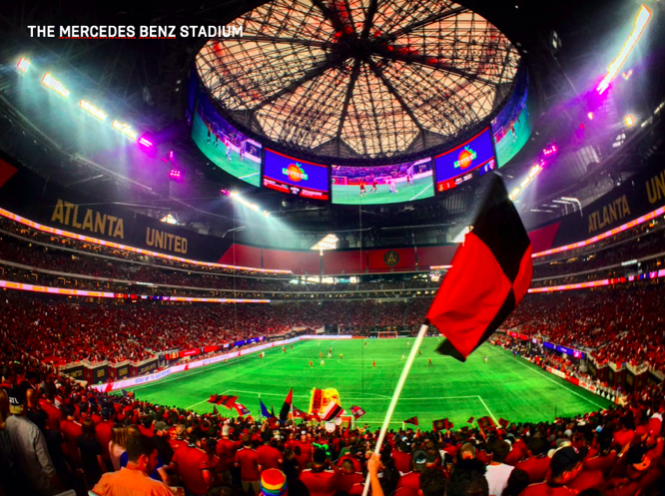
Arthur Blank has been investing in the sport of soccer for years. As planned, Atlanta Stadium was home to many of the lively, historic World Cup matches.
THE STRATEGY
We built the case on alignment, not incentives
Every bidder brings incentives. Cities load up tax packages, and the bid team works with whatever the host puts forward. We do not control those numbers. So we built our case on something more durable. We built it on alignment.
Douglas County sits west of the metro core. It is among the least populated of the thirteen counties in metro Atlanta, and it is the most diverse. Land was more affordable, infrastructure and growth were arriving, and there was real headroom, the kind of runway a national institution wants underneath a multi-decade commitment. That diversity story was not a talking point. It was the strategic spine of the bid.
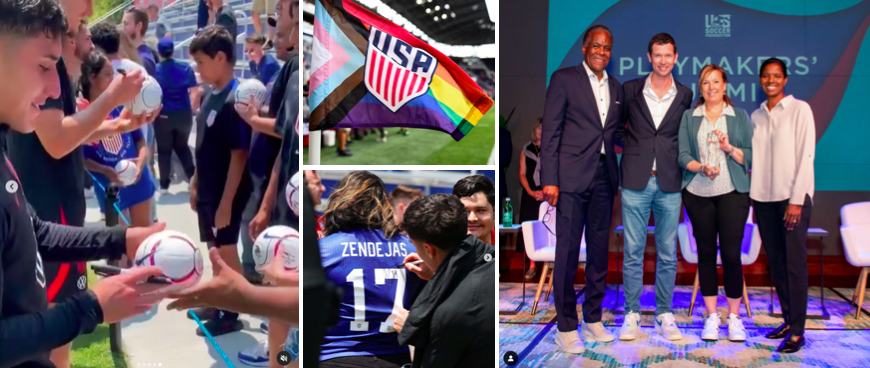
The Blank Family Foundation names diversity among its highest priorities, and the Federation does the same. Look at the athletes who play under the American banner across every level of the sport, and at the international makeup of the Atlanta United roster. American soccer is, by its nature, one of the most diverse institutions in sport. Douglas County, the underdog among the metro counties, mirrored that mission. We aligned the Federation, the Foundation, and the location into a single coherent story.
Pillar 01: Unite the Nation
Pillar 02: Engage the Community
Pillar 03: Build the Future
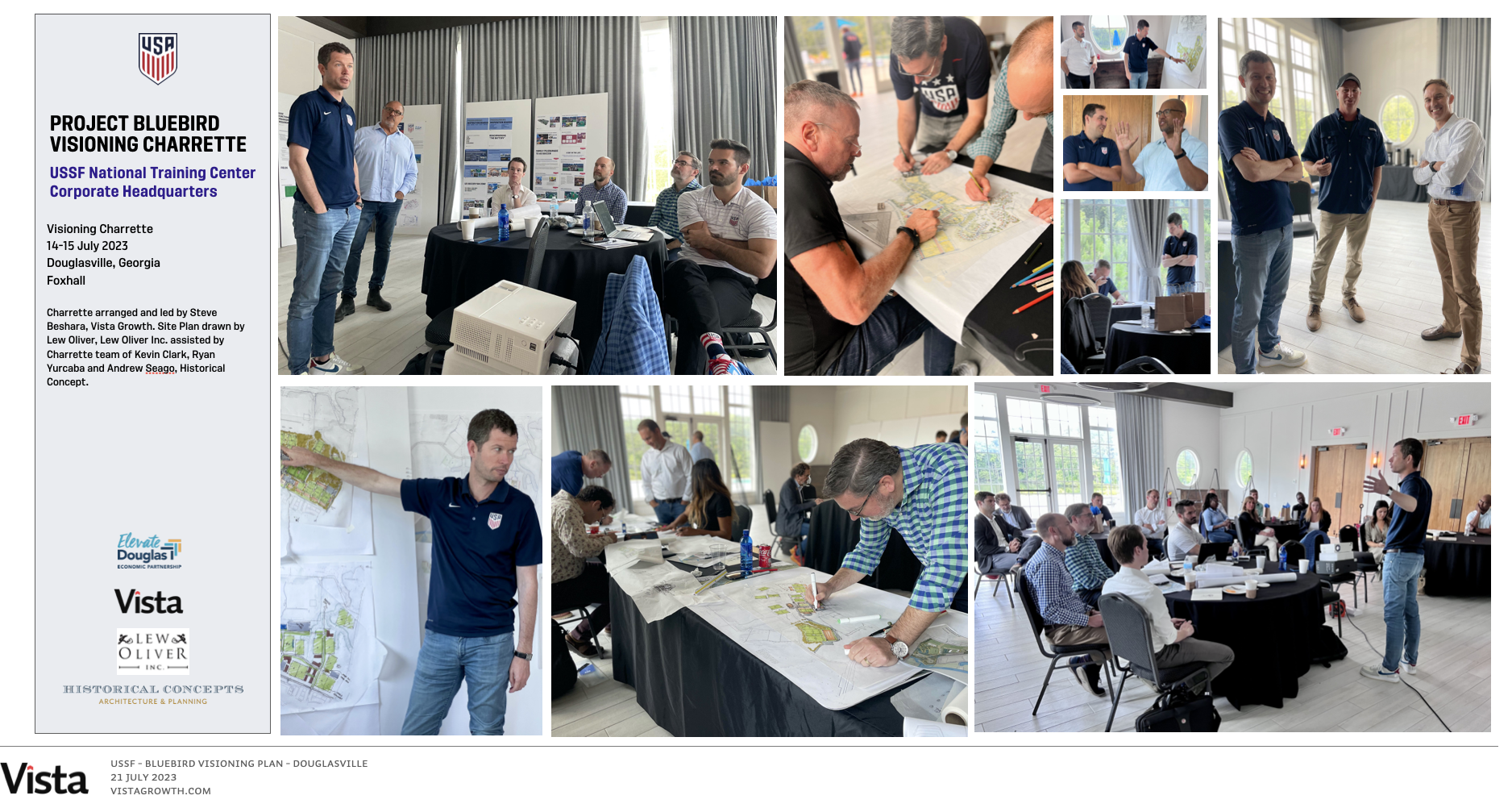
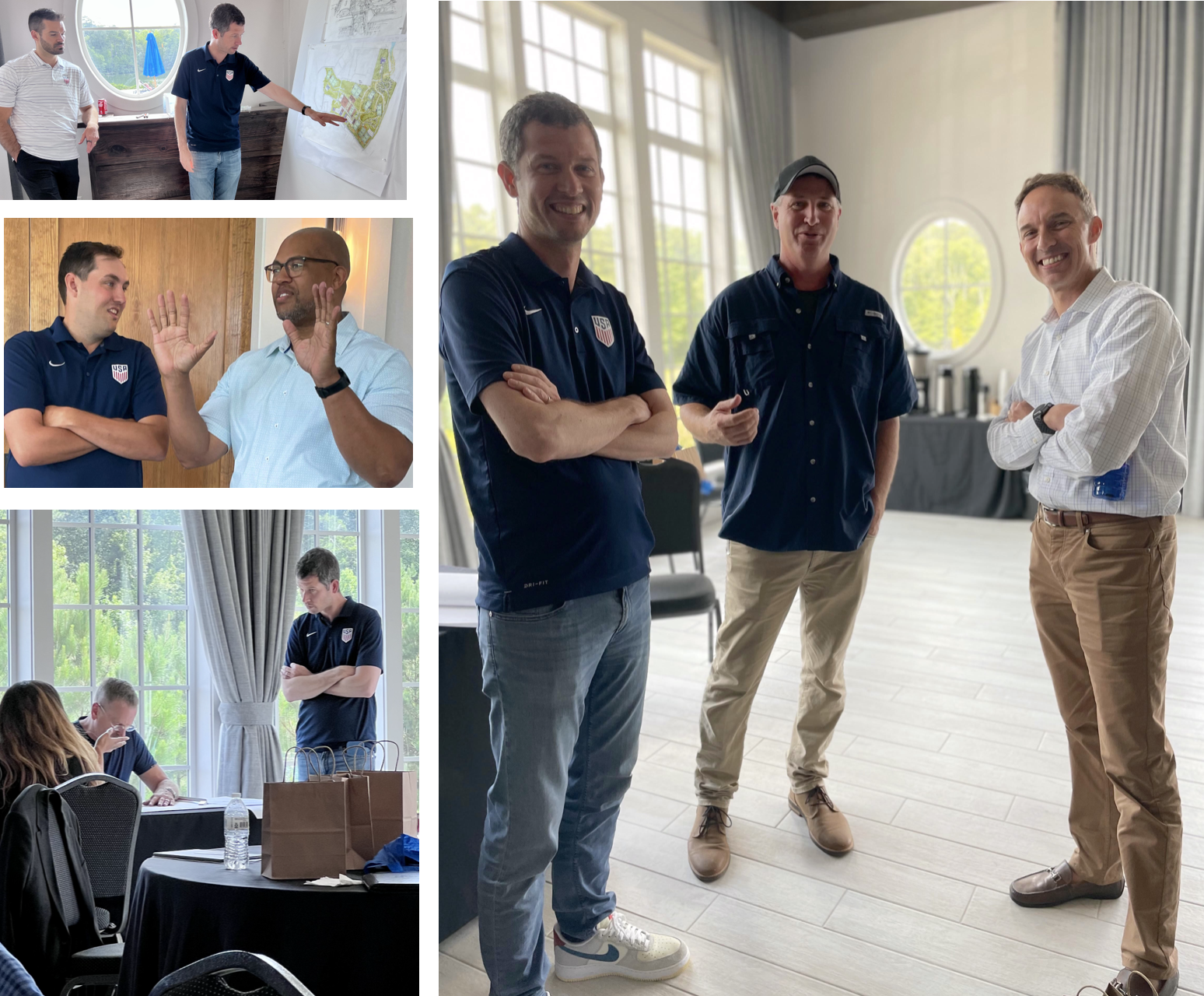
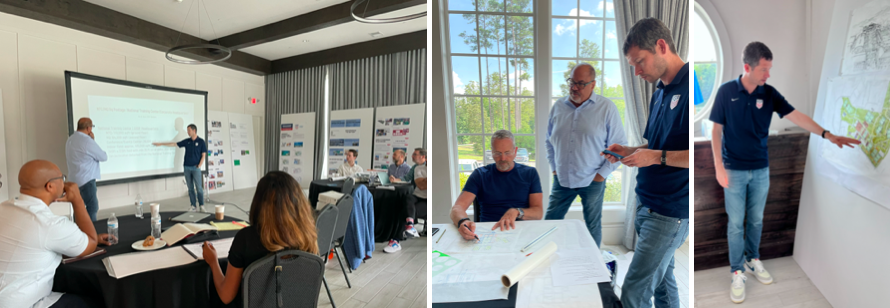
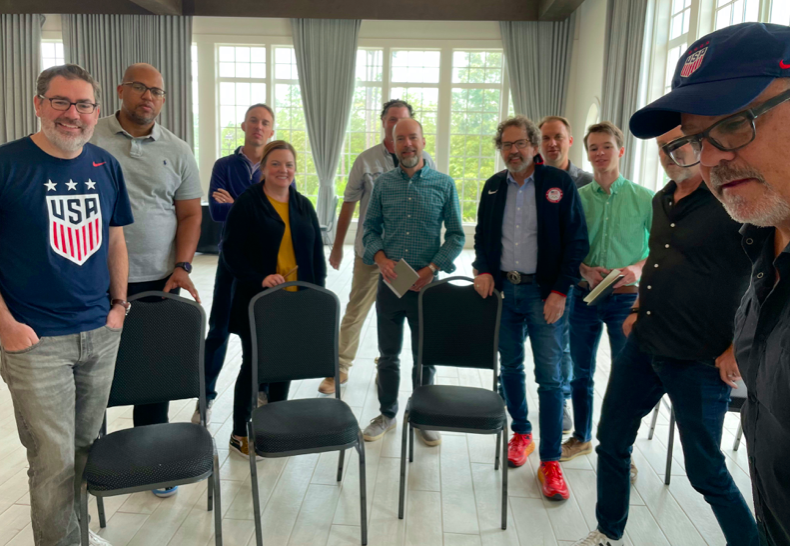
Under Steve’s direction, we assembled the USSF leadership with our talented team in a working charrette near the Project Bluebird site.
Every communication, every presentation, every element of the bid laddered up to those three ideas, and all of it laddered up to the Federation’s own mission.
THE TEAM
A roster built for the scale of the ask
We curate teams of experts that win. George Hirthler, a renowned writer of Olympic bid books, shaped the narrative architecture. Renowned planners Lew Oliver and Kevin Clark led the physical vision. To ground the design in a model that had already proven itself, we brought in Mike Plant, who developed and ran The Battery, the mixed-use district that surrounds the Atlanta Braves’ ballpark. The rest of Team Vista carried the strategy and execution.
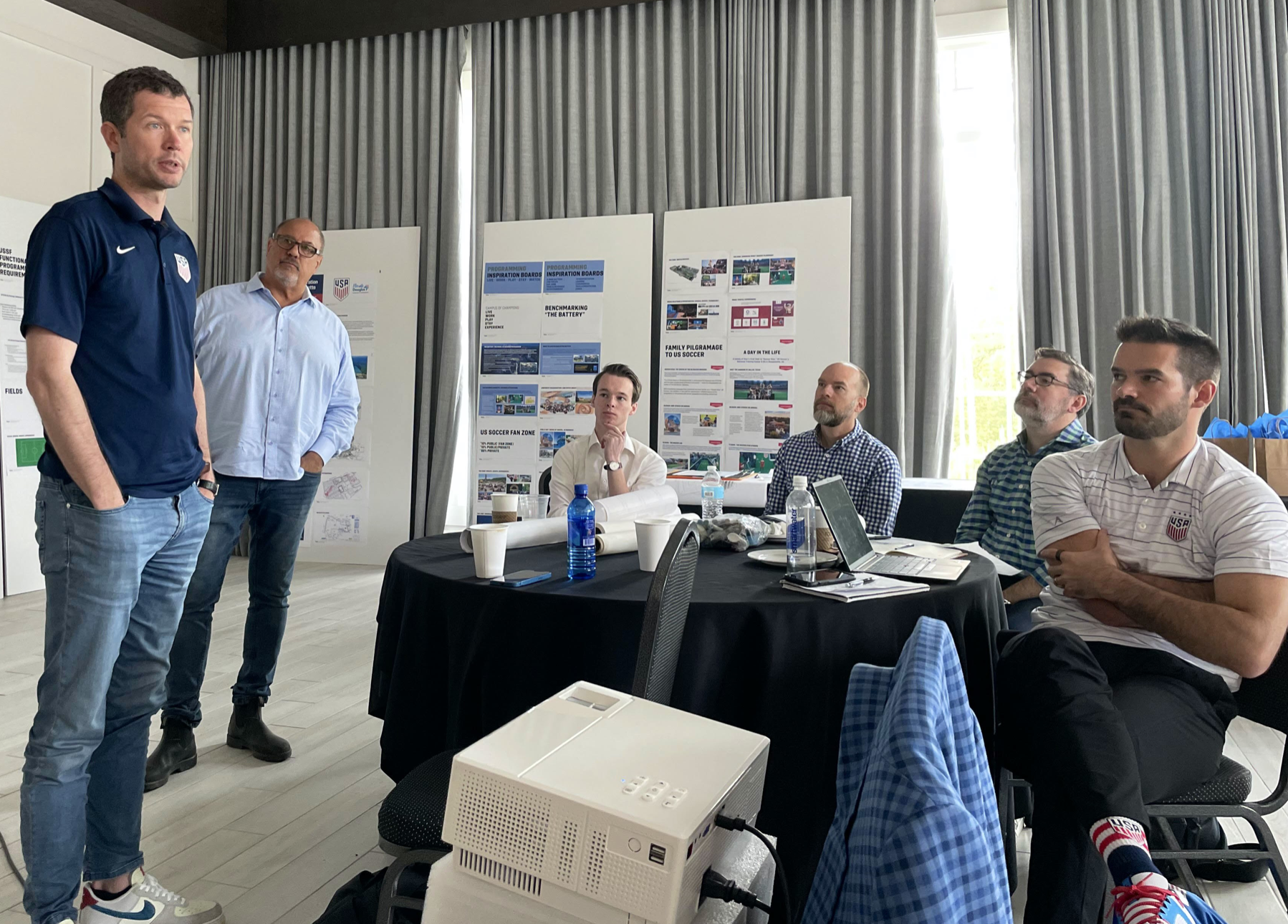
USSF CEO JT Batson shared his vision for the Training Center.
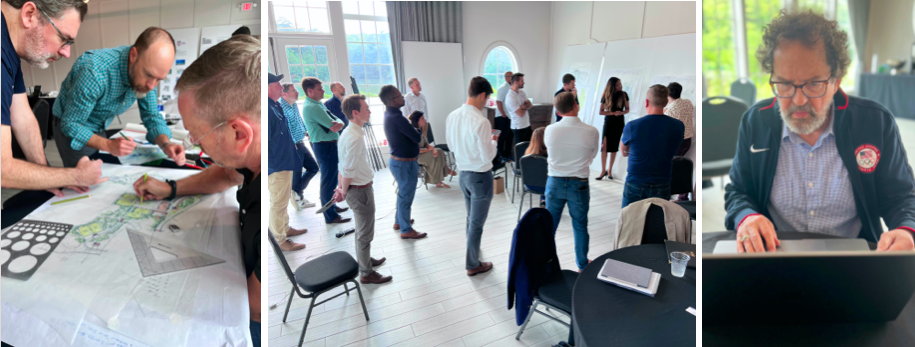
The Visioning Charrette was an intense two day work session with USSF leaders, Douglas County community leaders and Team Vista.
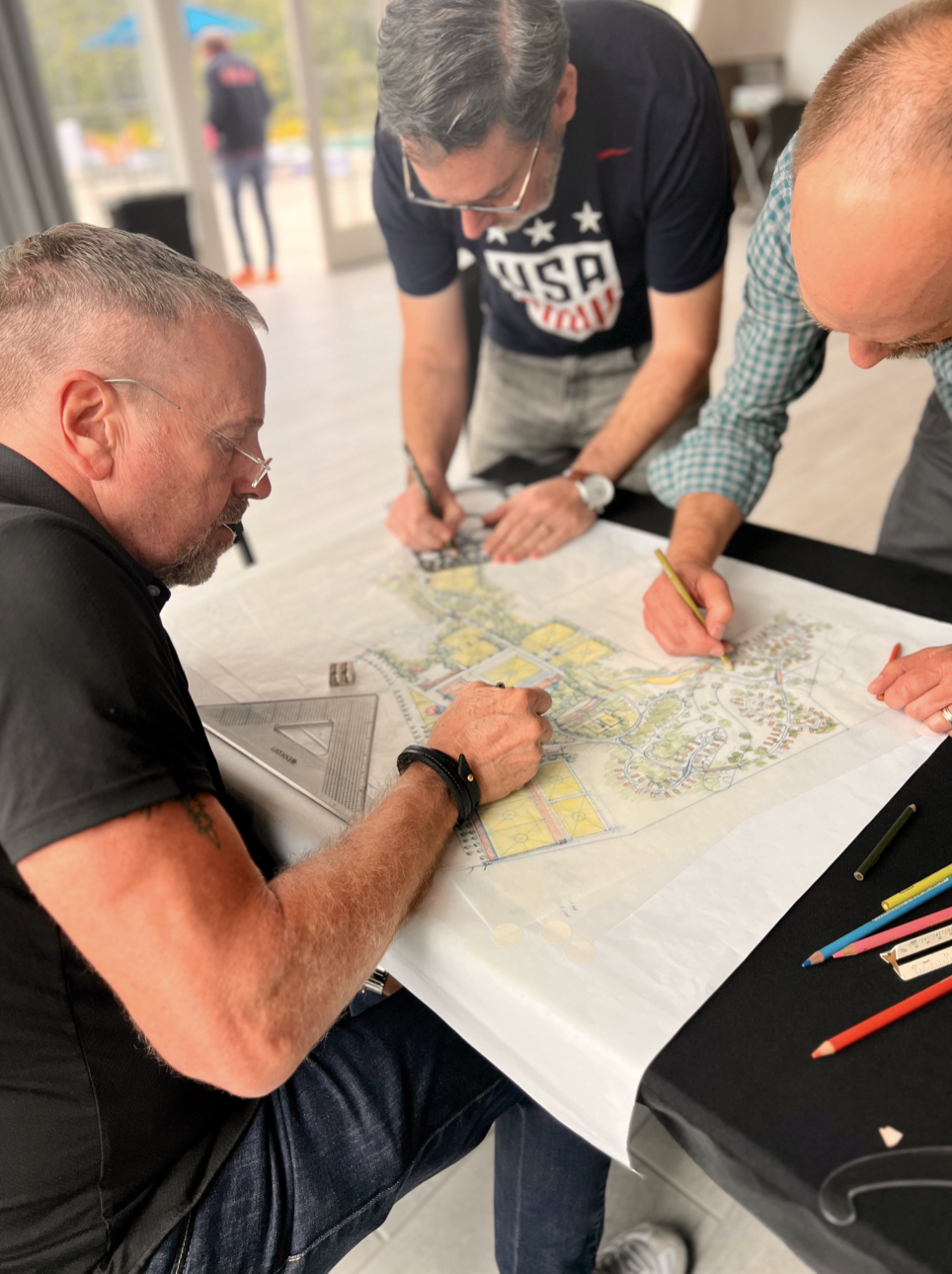
Lew Oliver, Kevin Clark and Ryan Yurcaba finalizing conceptual drawings.
THE DESIGN
We did not stop at a bid book. We designed the place.
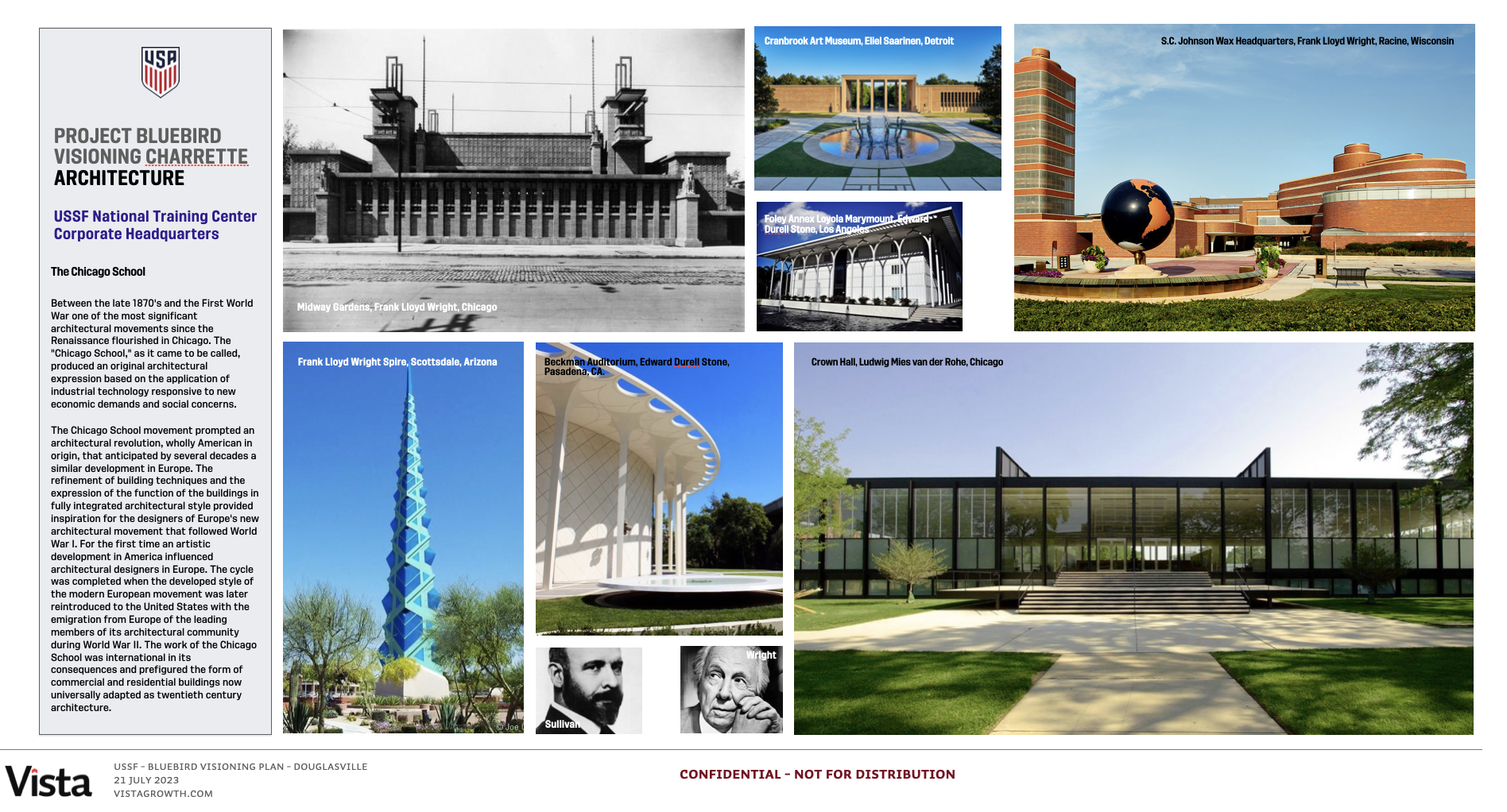
The Campus of Champions was a 200-acre vision for the Federation's headquarters, its seventeen playing facilities, and the full slate of programming the organization required. The strategic insight came from The Battery: a sports venue gains exponential value when it is wrapped in a new urbanism development, with corporate space, restaurants, retail, and a sense of place that draws people in on days when no one is playing.
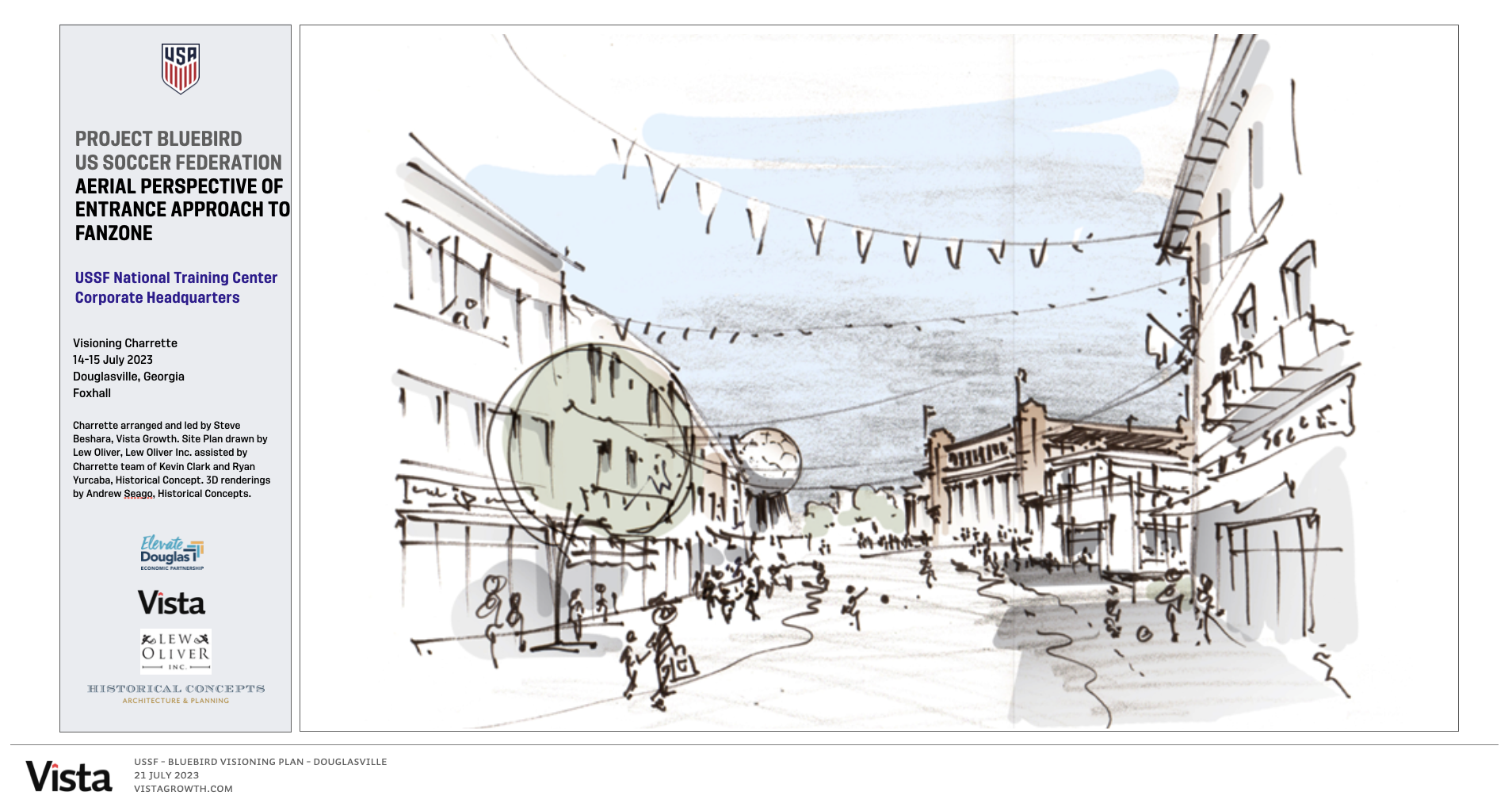
So we designed a new urbanism neighborhood as the front door to the Federation's home, with an enormous soccer ball at the entrance as a gateway landmark for the campus and the community beyond.
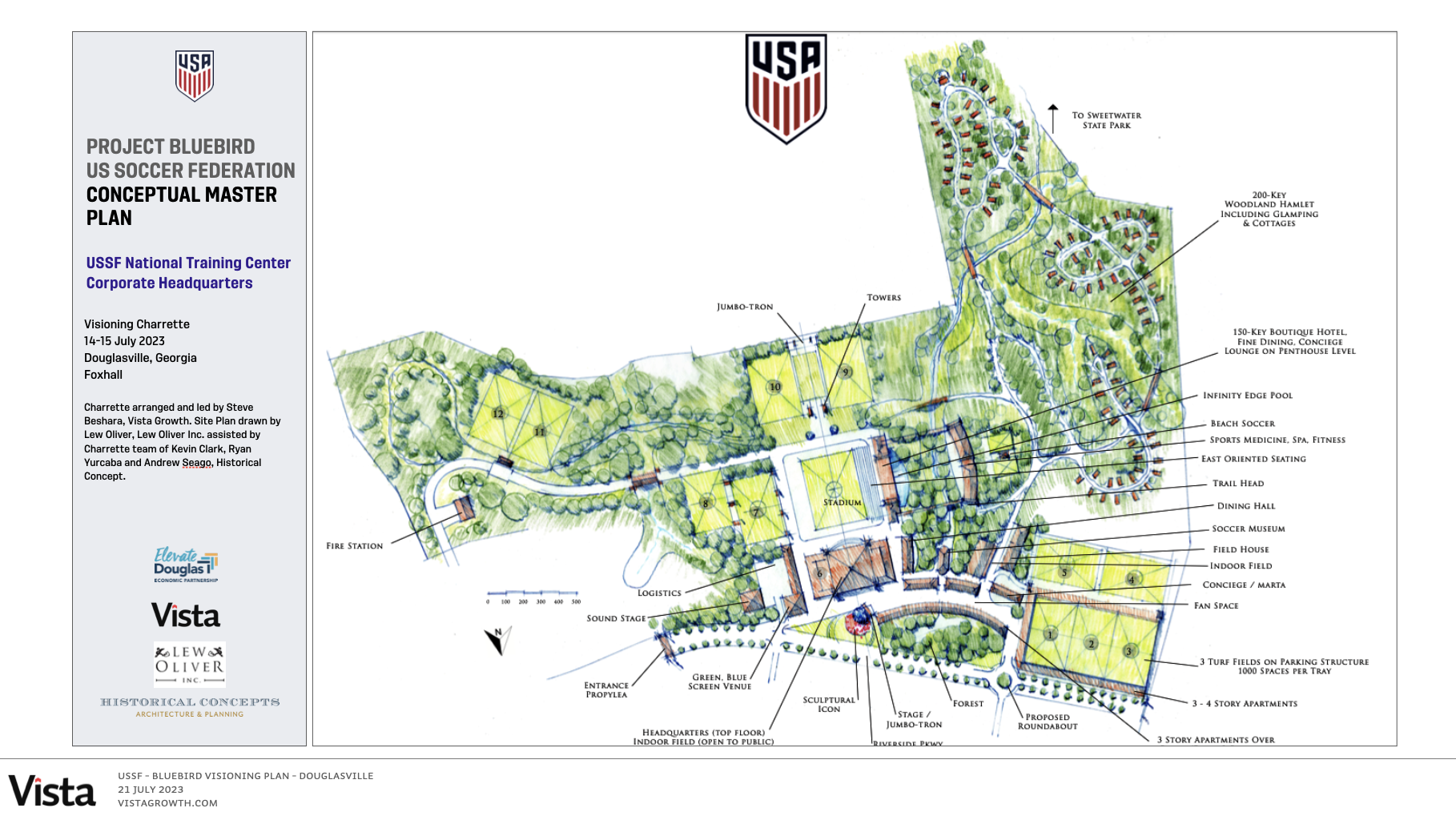
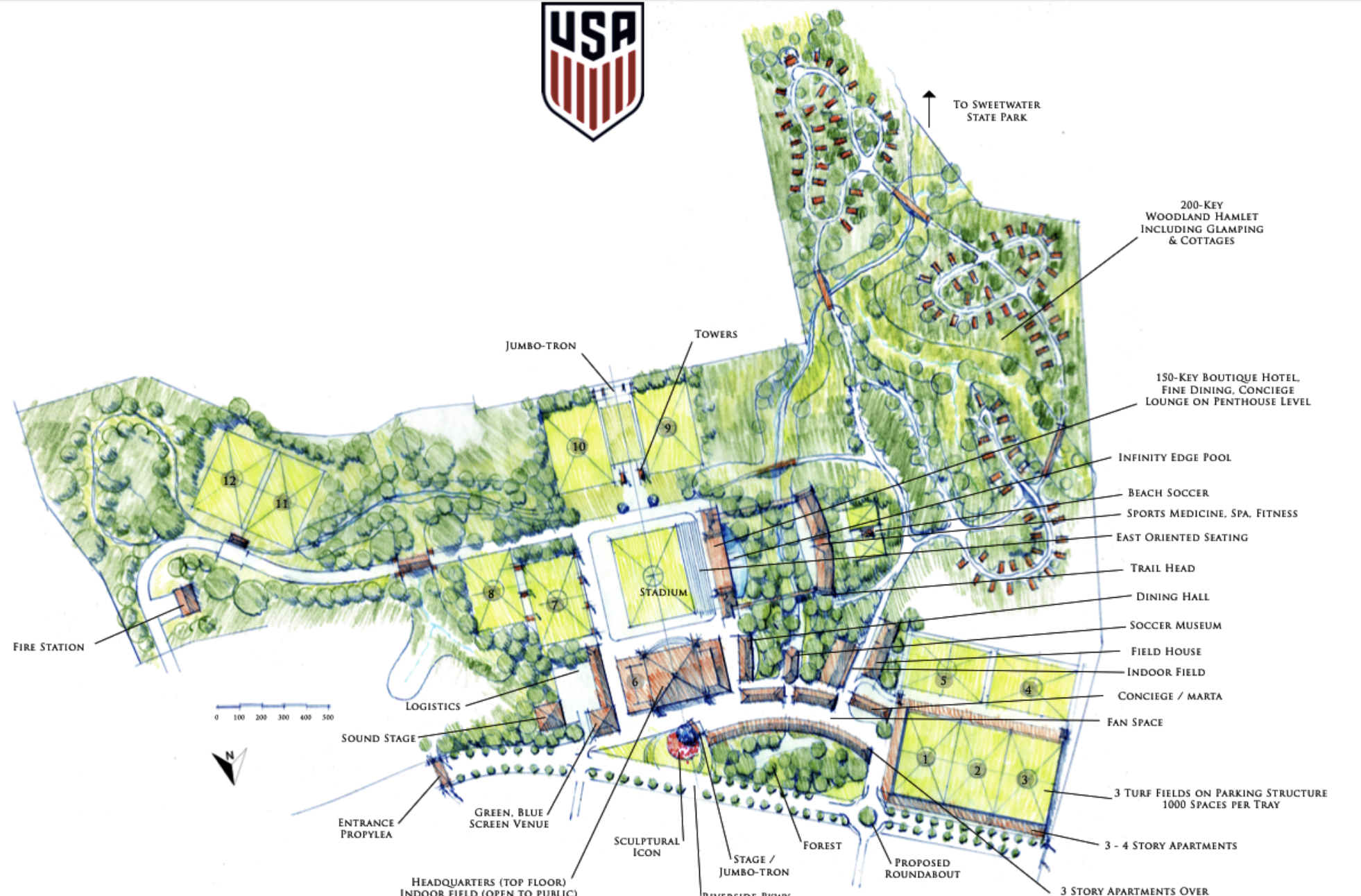
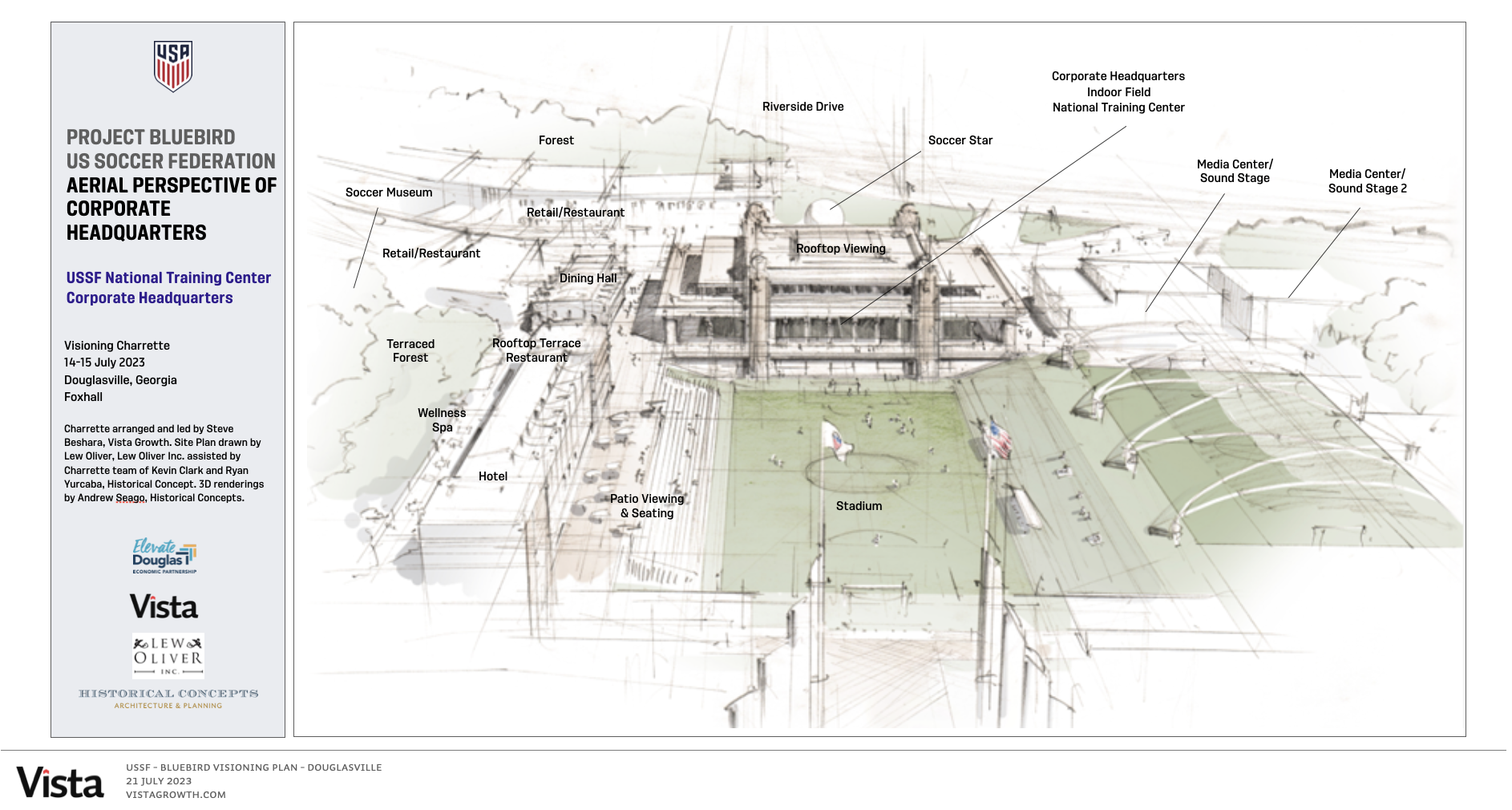
The Conceptual Master Plan of USSF National Training Center and Corporate Headquarters.
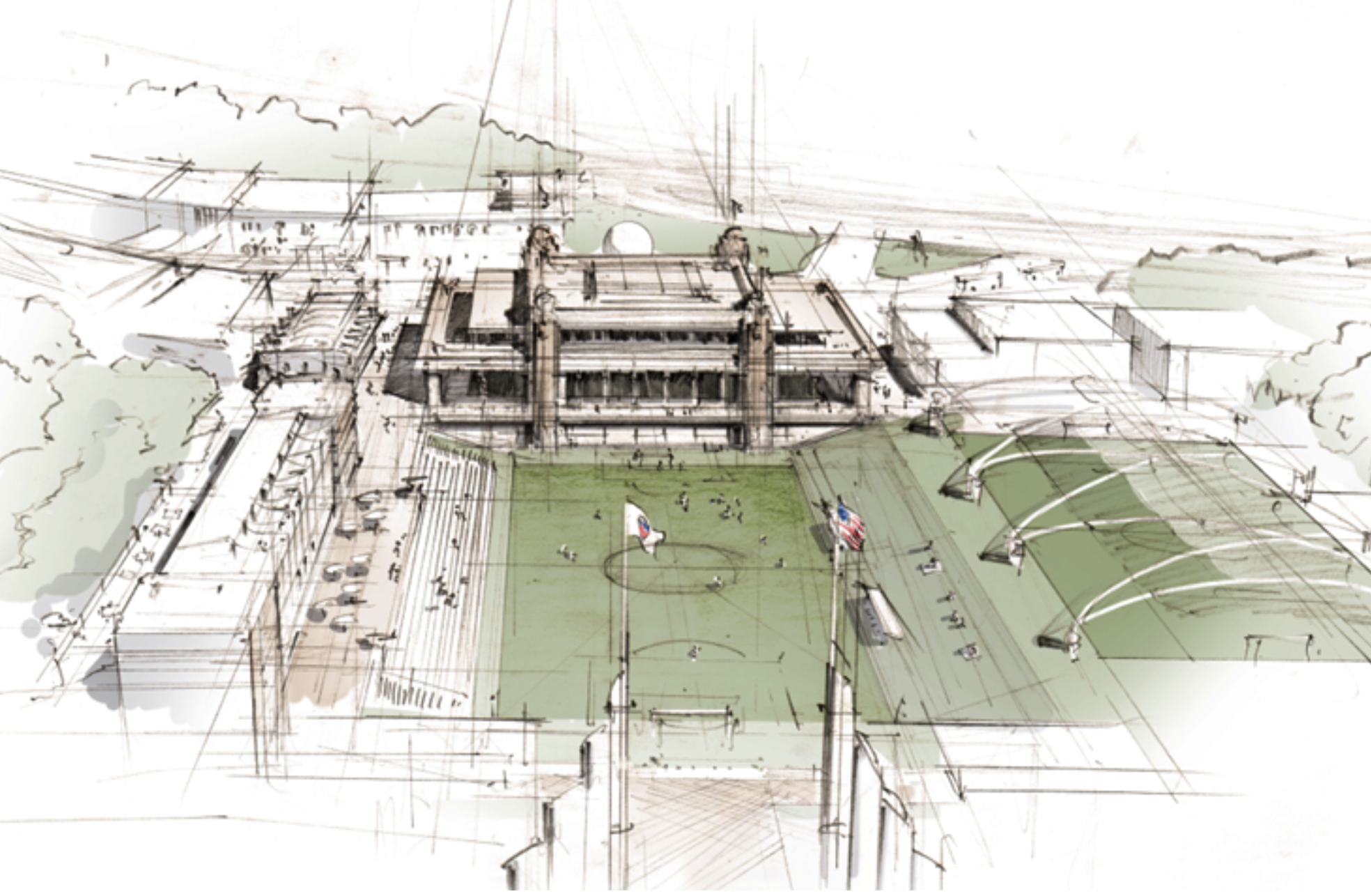
The headquarters looked down on the primary field the way center court looks down on the grass at Wimbledon, engineered to host the largest watch parties in the country. A place to visit, not only a place to work."
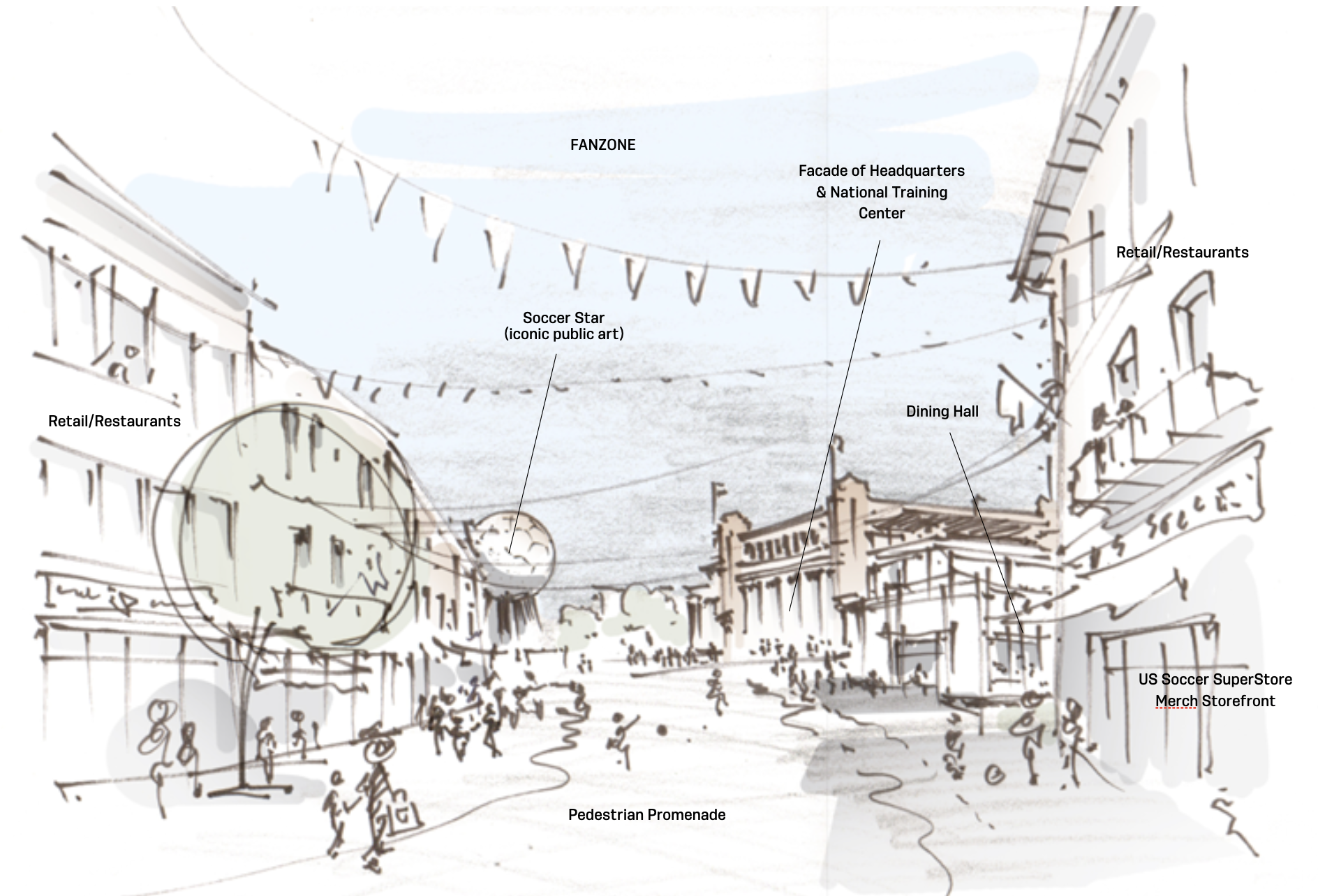
Inspired by the success of the Battery in Cobb County, we connected a Fanzone with retail, restaurants and new urbanism development.
THE DECISION
Delighted, inspired, and ultimately conflicted
The Federation’s leadership loved the campus design and the thinking behind it. And then the decision followed the money. Fayette County held 200 acres of land as well. The difference was simple and decisive: the Fayette landowner donated the acreage outright, while the Douglas parcel carried a market-value price.
On a facility of roughly $200M, a donated parcel closed a gap worth on the order of $10M. A ten percent swing in cost is not a detail. It is the decision.
The Federation chose Fayette.
THE LESSON
What you can control, and what you cannot
We brought the best strategy to the field. We aligned strongly with the client’s mission. We assembled a championship team and designed a campus the Federation genuinely wanted to build. We did the work right. And we lost, largely because of variables no strategy controls. We do not control the finances of the principals involved. We do not control the optics and the pressures that shape deals at this altitude. The larger the project, the larger the puzzle, and the more pieces sit outside any one team’s hands.
That is the honest lesson, and it is the one worth keeping. You come to the battlefield with the absolute best plan you can build. You execute flawlessly on everything within your control. And on the forces you cannot control, you influence, you urge, you recommend, and you press as hard as the situation allows.
Despite the competitive nature of these bids, we are delighted for USSF and their new community in Fayette. We have worked with the Fayette folks separately before and they are very fine people and community. Congratulations to all and we are huge fans of USSF and their success.
There is a footnote that says everything about the quality of the work. When Fayette and the Federation moved forward, they carried some of our thinking with them. They wanted to do more. They did not have the team that knew how to replicate The Battery, so they built smaller. Elements of our vision outlived our bid.
Why this matters for your growth
The discipline doesn’t change with the assignment
Team Vista has produced winning strategies, communication plans, and presentations day in and day out for thirty years. We do not win every final outcome. We win the vast majority of them, because the work is smart, strategic, and rigorously vetted before it ever reaches a decision maker.
That is the same engine we now bring to growth strategy, creativity and AI-augmented marketing transformation. Understand the mission of the client better than anyone in the room. Build the case on alignment, not just incentives. Field the right team. Make the vision tangible enough to walk through. Control what you can control, and influence the rest with everything you have.
The Takeaway
The bid was decided by numbers on a balance sheet. The strategy behind it is still standing.
That is how Vista works. We bring the absolute best strategic plan to every engagement, execute flawlessly on what we control, and press hard on everything else.
Team Vista produces winning.
Talk through a high-stakes positioning or growth challenge | vistagrowth.com